
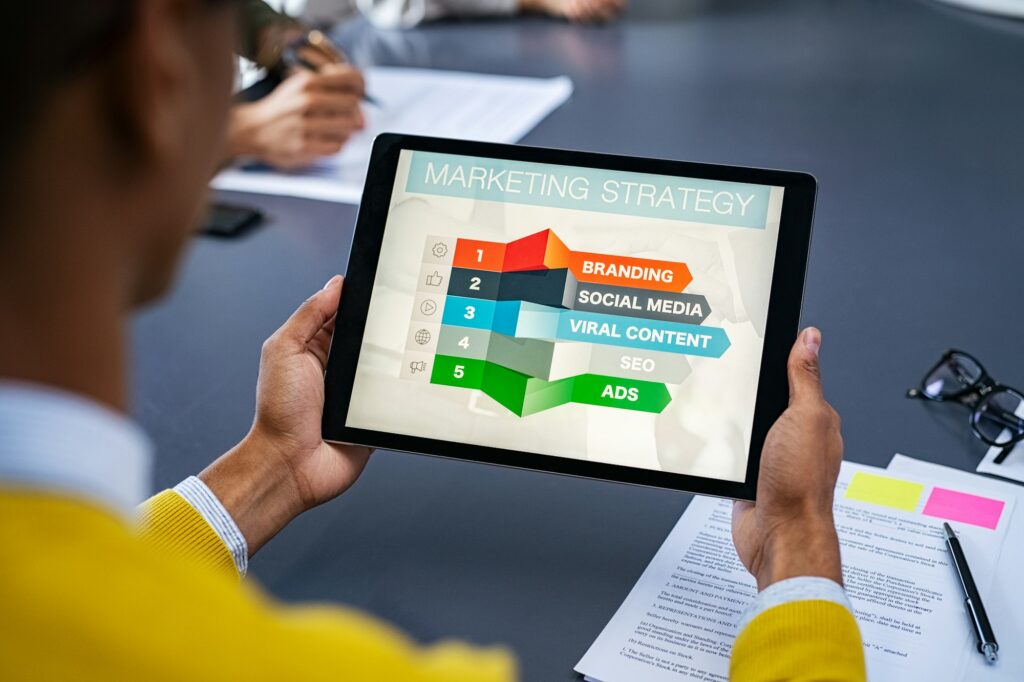
A business can be doing plenty of marketing and still feel unsure about what is working. The website gets visitors. Ads bring in enquiries. Social media keeps the brand visible. Yet sales are inconsistent, and every channel seems to need more time or money.
That is where a strategic marketing company can make a difference. Its job is to look at how people find your business, what helps them decide, and where opportunities are being lost. From there, it can help you choose what to improve first.
The change is rarely one dramatic campaign. More often, it is a series of better decisions that make your marketing work together.

What does a strategic marketing company actually do?
A strategic marketing company helps a business decide who it needs to reach, what it should say, which channels to use, and how to measure success. It then turns those decisions into a practical plan.
That may involve improving your website, strengthening your search presence, running paid advertising, planning content, or improving how you handle enquiries. The right mix depends on your business. A company getting plenty of leads but few sales has a different problem from one that is rarely found online.
This is why the first conversation should be about your business, not a list of services. An agency needs to understand what you sell, which customers are a good fit, how you currently win work and what growth would mean for you.
It shows you where the real problem is
When enquiries slow down, the obvious response is often to spend more on advertising. Sometimes that is the right move. At other times, the business is already getting enough attention but losing potential customers further along.
Imagine a service business whose ads bring people to its website. Visitors reach the service page, but few submit an enquiry. The issue could be an unclear offer, missing information about service areas or a contact form that is difficult to use. Increasing the ad budget would send more people into the same frustrating experience.
A strategic review looks at the full journey:
- How do customers first discover the business?
- What do they need to know before they enquire?
- Which pages or messages help them decide?
- Where do they hesitate or leave?
- What happens after they get in touch?
Those questions help a business put its budget where it will have the most impact. Sometimes the next step is a new campaign. Sometimes it is a better page, clearer pricing information or faster follow-up.

It helps you choose where to focus
There are many ways to market a business, and most companies cannot give every channel equal attention. A useful strategy makes choices.
For a business whose customers actively search for a service, SEO and Google Ads may be priorities. A business introducing an unfamiliar product may need content that explains its value before people are ready to search for it. An established company might already have strong visibility and benefit more from improving conversion or reconnecting with past customers.
These are starting points, not fixed rules. The decision should reflect customer behaviour, competition, budget and the time it takes for a sale to happen.
A good marketing partner should be able to explain why it recommends a channel and what role that channel plays. It should also be willing to say when an activity can wait. That gives your team a plan it can understand and a clearer way to judge progress.
It connects marketing that has been working separately
One common problem is that each part of marketing is managed separately. The website says one thing, ads make another promise, and the person who answers the enquiry has no context about what the customer saw.
Consider someone who clicks an ad promising help with a specific problem. They arrive on a general homepage and have to search for the relevant service. If they do enquire, they receive a generic reply several days later. Each step creates another chance for them to leave.
A joined-up approach gives that person a more consistent experience. The ad reflects a real customer need. The landing page answers the questions the ad raises. The enquiry reaches the right person, and the follow-up continues the same conversation.
This does not require a complicated system. It requires someone to look across the whole process and identify the points that need attention.
It makes content more useful to customers
Many businesses publish content because they feel they should. They write a blog, post on social media, and update their website, but they choose topics without much connection to customer questions.
Strategic content starts with what people need to know. What are they comparing? What concerns delay their decision? What does your team explain repeatedly on calls?
For a flooring retailer, useful content might help customers compare products for a busy household. For an accounting firm, it might explain what to prepare before changing providers. For a business selling a specialist product, it might show where that product fits and where it does not.
Content like this gives your sales team something useful to share. It can also help search engines and AI-powered tools understand what your business knows and offers. Clear explanations, accurate details and first-hand knowledge give readers more value than repeating broad marketing phrases.
It uses technology to solve a problem
Marketing tools can reveal useful patterns and save your team time. Analytics can show which pages people visit before enquiring. Advertising platforms can help you compare messages and audiences. A customer relationship management system can help track what happens after a lead arrives.
The tool itself is not the strategy. It matters because of the problem it helps solve.
For example, if enquiries arrive through several forms and inboxes, a clearer system may help your team see which ones still need a response. If leads regularly go quiet after an initial conversation, planned follow-ups may help you stay in touch. If reports show plenty of form submissions but few qualified prospects, the campaign may need a different message or audience.
At GlobalInfo, we connect search visibility, paid advertising, websites, and business automation around how a business operates. The aim is to make the customer journey easier to manage and improve, rather than add technology for its own sake.
It gives you better ways to judge results
Marketing reports often contain impressive numbers. Reach, clicks, and website visits can all tell you something, but they don’t answer every business question.
If your goal is to win more customers, you also need to know whether the enquiries are relevant and what happens to them. Did the person need the service you offer? Could your team contact them? Did the conversation lead to a quote, booking or sale?
The measures will differ by business. An online store may focus on sales and repeat purchases. A service company may track qualified enquiries and booked consultations. A business with a longer sales cycle may need to follow opportunities over several months.
A strategic marketing company should help you agree on these measures early. It should also be honest about what the available data can and cannot prove. That makes reviews more useful: you can discuss what happened, what you learned and what to change next.
What might this look like for your business?
Suppose your business is receiving steady website traffic but fewer enquiries than expected. Rather than recommending more content immediately, a marketing partner might review the pages attracting visitors and the questions those visitors are trying to answer.
That review could reveal that an important service page gives little detail about the process, shows no examples and makes it hard to contact the team. The first job would be to improve the page and its enquiry path. Once it is clearer, the business could test whether more relevant search traffic or paid advertising brings in suitable prospects.
The exact findings will differ from business to business. The useful part of the process is that each action has a reason.
How do you choose the right strategic marketing company?
Look for a company that asks thoughtful questions before offering a solution. It should want to understand your customers, current marketing, sales process and capacity to take on new work.
Ask how it will decide what to prioritise. Find out who will do the work, what it will need from your team and how often you will review results together. If it recommends a new channel, ask what success would look like and when you should reassess the decision.
You should feel comfortable asking for plain explanations. A strong working relationship depends on honest feedback in both directions. Your agency needs to hear whether leads are useful; you need to understand why it wants to change a campaign or invest in a particular piece of content.
Frequently asked questions
Is strategic marketing only for large businesses?
No. Smaller businesses often have limited time and budgets, which makes prioritising especially valuable. The plan should fit the size of the business and the resources available to carry it out.
What is the difference between a marketing strategy and a marketing campaign?
A strategy sets the goal, audience, priorities and measures. A campaign is a specific activity within that plan, such as promoting a service through Google Ads. A campaign works better when its purpose is clear.
How soon should a business expect results?
It depends on the work involved. A paid campaign can provide feedback relatively quickly, while improving organic visibility or building a new content library usually takes longer. Ask your agency what it expects to learn at each stage and when it will review progress.
A better way to move forward
A strategic marketing company cannot promise that every campaign will succeed. It can help you understand what is happening, make more informed choices and improve the parts of your marketing that matter most.
If your channels feel disconnected or you are unsure where to invest next, GlobalInfo can help you review the customer journey and identify a practical starting point. The conversation begins with your business goals and the opportunities already in front of you.