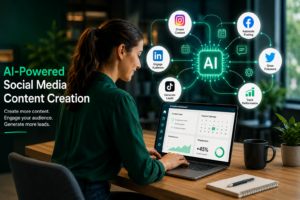
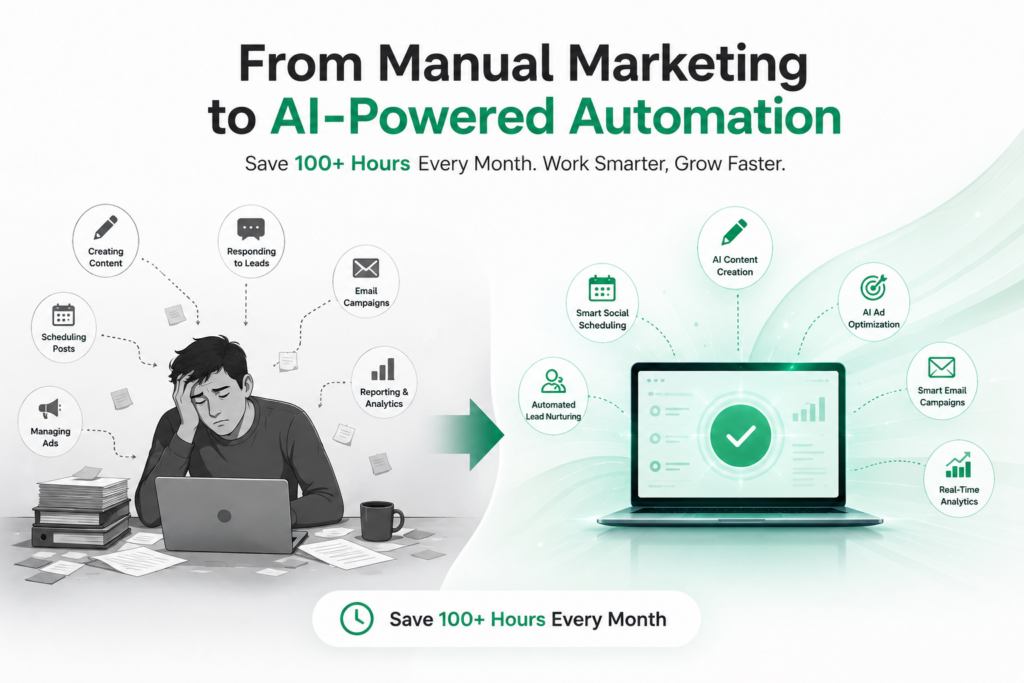
There was a time when marketing meant long hours, endless coordination, and constant manual effort. Creating content, scheduling posts, responding to leads, optimising ads, everything required hands-on involvement. . For many organisations, this meant late nights, overworked teams, and uneven outcomes.
In 2026, that reality is rapidly changing. Marketing is no longer about doing extra work; it’s about creating systems that do it for you. With the growth of artificial intelligence and automation, organisations are silently regaining over 100 hours every month, not by cutting costs, but by removing inefficiencies.
The Hidden Cost of Doing Everything Manually
Manual marketing doesn’t always look inefficient on the surface. A post gets published, emails go out, ads run, but behind the scenes, it’s a constant cycle of effort. Teams jump between tools, repeat the same tasks daily, and spend more time managing processes than actually improving them.
What makes this more challenging is that manual systems don’t scale well. As your business grows, so does the workload. More leads mean more follow-ups. More content means more planning. Eventually, growth starts to feel like pressure instead of progress.
This is where most businesses hit a ceiling, not because of a lack of ideas, but because of limited time.
From Workflows to Systems: What AI Changes
The biggest shift AI brings isn’t speed, it’s structure.
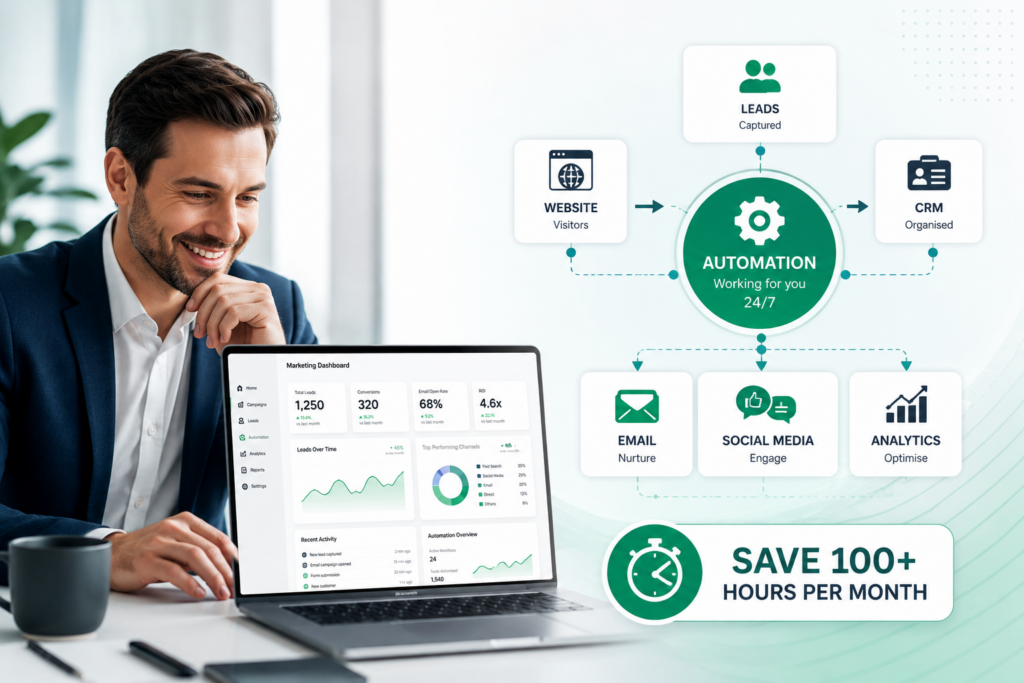
Instead of running isolated campaigns, businesses are now building connected systems that work together. Content feeds into lead generation. Leads flow into automated nurturing. Engagement triggers responses. And all of it is tracked and optimised in real time.
What used to be a series of manual steps is now a continuous loop.
A piece of content, for example, doesn’t just sit on a feed anymore. It attracts attention, triggers engagement, and feeds data back into the system. That data is then used to improve the next piece of content, the next ad, and the next campaign—without someone having to manually analyse every detail.
Where the Time Actually Disappears
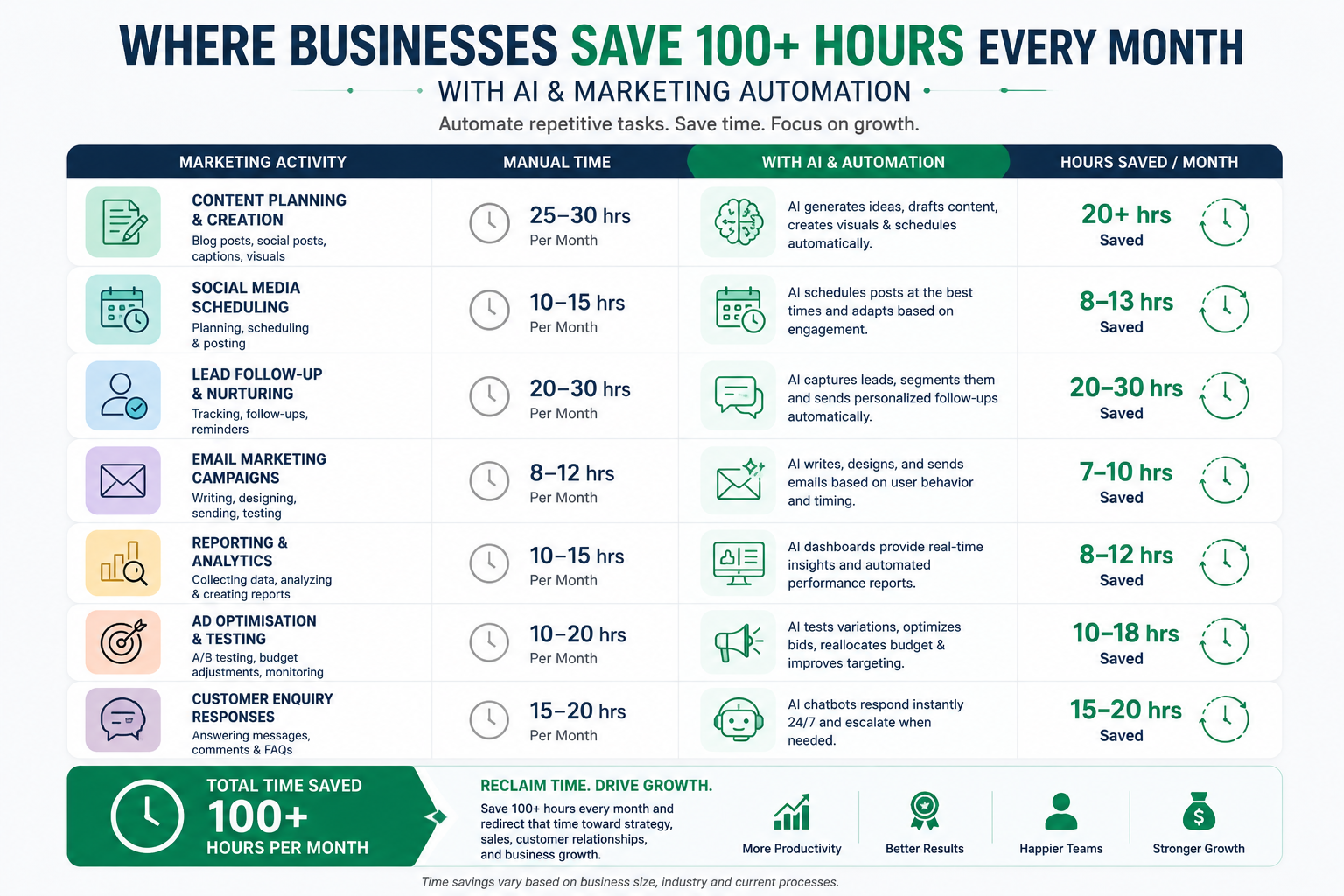
Most business owners underestimate how much time they spend on tiny, repetitive chores. Writing captions, scheduling posts, reviewing stats, responding to messages, it all adds up.
AI eliminates this friction in a way that appears nearly imperceptible.
Content development, which traditionally took hours of thinking and editing, is now reduced to minutes. Ideas are generated instantaneously, drafts are created rapidly, and scheduling is handled automatically. What used to take all afternoon may now be completed before your first meeting of the day.
The same applies to lead management. Instead of manually tracking enquiries and sending follow-ups, AI systems capture leads, segment them, and respond immediately. There’s no delay, no missed opportunity, and no need to constantly monitor incoming messages.
Even ad management, once a highly manual process, has evolved. Campaigns no longer rely on constant human adjustments. AI tests variations, reallocates budgets, and refines targeting in real time. The system learns what works and doubles down on it—without waiting for someone to step in.
Engagement Without the Burnout
One of the most draining aspects of marketing has always been staying “active.” Responding to every comment, answering every message, keeping conversations going, it’s essential, but exhausting.
AI changes the nature of engagement entirely.
Instead of manually reacting to every interaction, businesses now use intelligent systems that respond instantly and appropriately. A customer enquiry doesn’t sit unanswered. A comment doesn’t go unnoticed. Conversations continue, even outside business hours.
What’s important here is not just speed, but consistency. Every interaction feels timely, and every lead is acknowledged. This creates a better customer experience—and removes a huge burden from teams.
Why This Shift Feels Different
Automation isn’t new. Businesses have been using tools for years. But what’s different now is the level of intelligence behind those tools.
Earlier systems followed instructions. Today’s systems make decisions.
They don’t just send emails; they choose when to send them. They don’t simply run ads; they choose who should see them. They don’t merely monitor performance; they evaluate it and change accordingly.
This change from execution to decision-making is what makes AI so effective. It does more than only aid marketers; it also replaces entire levels of human labour.
The Real Benefit Isn’t Just Time
Saving 100+ hours a month sounds impressive, and it is, but the real benefit goes deeper.
When you remove repetitive tasks, you create space for better thinking. Strategy improves. Creativity increases. Decisions become more intentional. Instead of asking, “How do we get this done?” businesses can focus on, “What should we do next?” This is where growth happens.
What a Modern Marketing System Looks Like
A well-built AI-driven system doesn’t feel complex; it feels seamless.
Content is created and distributed without delays. Leads are captured and nurtured without manual follow-ups. Campaigns run, are adjusted, and improved continuously. And performance is visible in real time, without the need for detailed reports.
Everything is connected, and everything has a purpose.
The result is not just efficiency, it’s clarity.
Why Some Businesses Still Struggle
Despite the obvious benefits, not every firm sees them immediately. The difficulty is not the technology, but the strategy.
Some try to automate everything at once, resulting in disjointed tools. Others rely on automation without a defined plan, resulting in generic and unproductive advertisements. In certain circumstances, poor data quality hinders AI’s capabilities.
The idea is to avoid rushing and instead build steadily. Begin with one section, make it functional, and then expand. These little systems eventually join to become something far more powerful.
The Future Isn’t Manual
Marketing is no longer about effort; it’s about design.
The businesses that are growing fastest today are not the ones doing the most work. They are the ones building systems that work for them. Systems that attract, engage, and convert, without constant input.
AI and automation are not replacing marketers. They’re replacing the parts of marketing that shouldn’t have been manual in the first place.
Final Thoughts
The shift from manual marketing to AI-driven systems is already happening. Quietly, but rapidly.
Businesses that embrace it are not just saving time, they’re changing how they operate. They’re becoming more efficient, more consistent, and more scalable.
Saving 100+ hours a month is just the beginning. The real transformation is spending less time on marketing and more time growing the business. And that’s where the real advantage lies.